Quick answer: Selling digital ebooks on Etsy involves four main steps: creating a well-formatted PDF (Etsy sells digital downloads, not EPUB files, so PDF is the standard format), setting up an Etsy shop, listing the ebook with strong keywords and a clear preview, and pricing it competitively within its niche. Tools like Ebookerr make the first step significantly easier, since they turn written content into a properly formatted PDF without any design work. The rest of this guide breaks down each step in detail, along with the mistakes that keep many first-time Etsy sellers from making sales.
Why Etsy Works for Ebook Sales
Etsy isn’t just for physical crafts anymore. Digital downloads — including ebooks, templates, and printables — have become one of the platform’s fastest-growing categories, largely because buyers already trust Etsy for handmade and niche products, and that trust extends naturally to digital guides, workbooks, and planners.
The appeal for sellers is straightforward: no inventory, no shipping, and no manufacturing costs. Once an ebook is uploaded, it can be sold indefinitely without any additional work per sale. That makes it an accessible starting point for beginners who don’t want to deal with print-on-demand logistics or physical products.
Step 1: Choose a Profitable Ebook Niche
Not every topic sells equally well on Etsy. The platform’s audience skews toward practical, actionable content — planners, guides, templates, and how-to resources tend to outperform general nonfiction or fiction, which is better suited to Amazon Kindle.
Popular ebook categories on Etsy include:
- Budgeting and personal finance templates
- Meal planning and recipe collections
- Wedding and event planning guides
- Journaling prompts and self-reflection workbooks
- Small business and social media planning guides
- Homeschooling and educational resources
A useful way to validate a niche before writing anything is to search Etsy directly for similar products and check how many reviews the top listings have. A category with zero competition often means zero demand, while a category with hundreds of established sellers and steady reviews usually indicates a real, ongoing market worth entering.
Step 2: Create the Ebook
This is the step where most beginners either get stuck or spend far more time than necessary. Etsy buyers expect a clean, professional-looking PDF — inconsistent fonts, awkward spacing, or a document that clearly started as a Word file with no formatting effort will show up immediately in reviews.
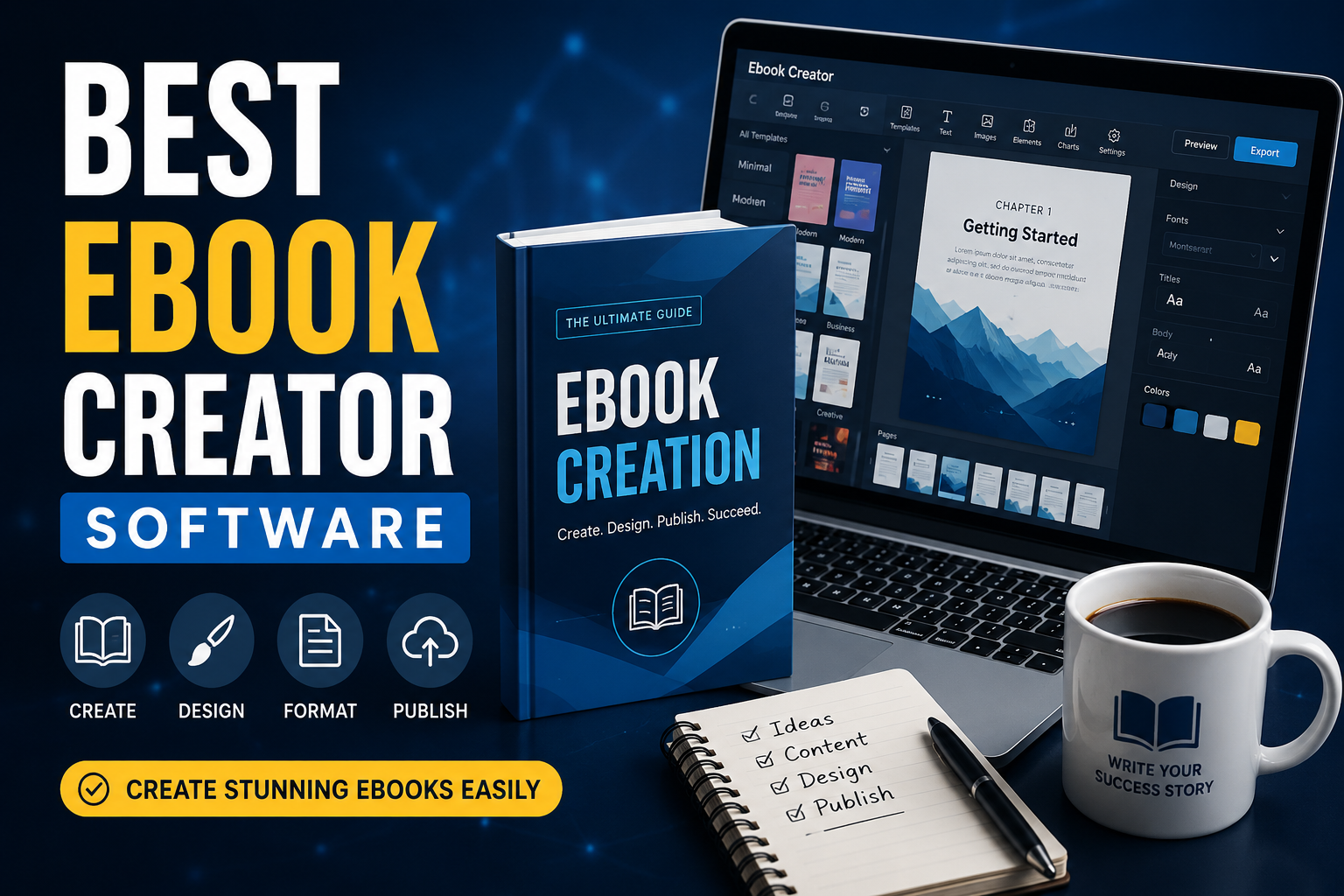
This is where a template-based tool makes a real difference. Ebookerr, for example, is built specifically to turn written content into a polished, ready-to-sell file without requiring any design background. At $9.97/month for unlimited use, it covers PDF export directly — the exact format Etsy requires for digital downloads — along with EPUB and Word, which are useful if the same content is later adapted for Kindle or print.
A few practical formatting guidelines for an Etsy-ready ebook:
- Keep a consistent font and color scheme throughout
- Include a simple, clean cover page — this often doubles as part of the listing thumbnail
- Add a table of contents for anything longer than 10–15 pages
- Leave enough white space that the document doesn’t feel cramped
- Export as a high-quality PDF, since Etsy buyers download and often print these files
Step 3: Set Up an Etsy Shop
Opening an Etsy shop takes about fifteen minutes. The account requires a shop name, a payment method for receiving funds, and basic shop policies covering things like refunds — which for digital products are usually limited, since files can’t be “returned” the way physical goods can.
A few settings matter more than beginners expect:
- Shop banner and logo — even a simple, consistent visual identity builds trust faster than a blank, generic shop page
- About section — a short, genuine explanation of who’s behind the shop performs better than a generic corporate description
- Shop policies — clearly stating that digital files are non-refundable (standard for this category) avoids confusion after purchase
Step 4: Write a Listing That Actually Converts
Etsy’s search algorithm relies heavily on the words used in the title, tags, and description, which makes keyword research just as important as the product itself.
Title: Front-load the most searched terms. Instead of a vague title like “Budget Planner,” something like “Monthly Budget Planner PDF – Printable Finance Tracker for Beginners” captures more of the specific phrases buyers actually search for.
Tags: Etsy allows up to 13 tags per listing, and each one should reflect a real search phrase rather than a repeated variation of the same word. Mixing broad terms (“budget planner”) with more specific ones (“weekly budget printable”) tends to capture a wider range of searches.
Description: Lead with what the buyer gets and how it solves a problem, followed by details like page count, format, and what’s included. Avoid dense paragraphs — short, scannable sections perform better.
Preview images: Etsy buyers can’t flip through a digital file before buying, so preview images do the selling. Showing two or three sample pages, along with a clean cover mockup, significantly increases buyer confidence compared to a single generic thumbnail.
Step 5: Price the Ebook Correctly
Pricing on Etsy tends to follow niche-specific norms rather than a universal formula. Simple single-page printables often sell for $3–7, while more comprehensive guides or multi-page workbooks can reasonably sell for $15–40, depending on depth and perceived value.
A practical approach for beginners is to look at the five or six top-performing listings in the same category and price within that range initially, then adjust after the first few weeks based on actual sales data. Pricing too low rarely helps — Etsy buyers browsing this category often equate very low prices with low quality, particularly for anything positioned as an in-depth guide rather than a quick printable.
Common Mistakes First-Time Sellers Make
Skipping keyword research entirely. A great ebook with a vague, generic title and no strategic tags can sit unseen for months. Keyword research isn’t optional — it’s often the single biggest factor separating a shop that gets consistent sales from one that doesn’t.
Using a Word document as the final file. Files that clearly started as unformatted Word documents — inconsistent spacing, default fonts, no cover page — tend to generate negative reviews even when the content itself is solid. A template-based tool avoids this problem from the start.
Only listing one product. Etsy shops with a single listing rarely perform as well as shops with a small, related collection. Buyers browsing one budget planner are often interested in a companion habit tracker or goal-setting workbook from the same shop, and Etsy’s algorithm tends to favor shops with more listings and cross-shop browsing activity.
Ignoring the preview images. Since buyers can’t preview the actual file before purchasing, weak or absent preview images are one of the most common reasons an otherwise good ebook doesn’t convert.
Not updating listings after launch. Etsy’s search ranking responds to ongoing engagement — views, favorites, and sales. A listing that sits untouched for months without any updates to tags or images tends to lose visibility over time compared to shops that periodically refresh their listings.
How Much Can You Actually Make?
Results vary enormously by niche and shop age, but a reasonable starting expectation for a new shop with two or three well-optimized listings is somewhere between a handful and a few dozen sales per month in the first few months, with growth typically compounding as reviews and shop history accumulate. Etsy rewards consistency more than a single perfect listing — shops that add new products every few weeks tend to outperform shops that publish once and stop.
Building a Small Catalog Instead of a Single Listing
New sellers often treat their first digital download as a one-time test rather than the start of a catalog, but Etsy’s search algorithm and buyer behavior both reward shops with more than one related product. A buyer who purchases a weekly meal planner is a natural candidate for a grocery list template or a recipe card set from the same shop, and Etsy tends to surface related listings from a shop a customer has already bought from.
A practical approach for a beginner is to plan a small family of three to five related products before launching, rather than releasing one item and waiting to see what happens. This doesn’t mean building everything before the first sale — a common strategy is to launch the first product, use early sales and favorites data to confirm the niche has demand, and then expand the catalog based on what’s actually resonating with buyers.
Because a flat-rate tool like Ebookerr doesn’t charge per project, this kind of catalog-building approach doesn’t add ongoing software costs the way per-export or credit-based platforms sometimes do — a seller can produce five related guides for the same monthly price as one, which changes the economics of testing a niche before committing significant time to it.
Handling Customer Questions and Reviews
Digital products generate a different kind of customer interaction than physical goods. Since there’s no shipping or physical defect to deal with, most Etsy messages for ebook sellers fall into a few predictable categories: questions about file compatibility (can this be opened on a phone, does it work with a specific app), requests for a print-friendly version, or occasional confusion about how to access the download after purchase.
Responding quickly to these messages matters more than it might seem, since Etsy factors response time and rate into a shop’s overall standing, which in turn can influence search visibility. A short FAQ section built into the listing description — covering file format, how to access the download, and basic printing instructions — tends to reduce the volume of repetitive messages significantly.
Reviews for digital products are also weighted differently by buyers than reviews for physical items, since there’s no risk of shipping damage or sizing issues to complain about. Most negative reviews on ebook listings trace back to one of two causes: the file didn’t match what the preview images suggested, or the content felt thin relative to the price. Both of these are avoidable by making sure the preview images accurately represent the finished product and by pricing in line with the actual depth of the content.
Frequently Asked Questions
Do I need EPUB or PDF for Etsy digital downloads? PDF is the standard format for Etsy digital downloads, since most buyers print or read the file directly rather than loading it onto an e-reader. A tool like Ebookerr that exports directly to PDF, along with EPUB and Word for other platforms, covers this requirement without needing a separate converter.
How much does it cost to start an Etsy digital shop? Etsy charges a small listing fee (typically $0.20 per listing) plus a transaction fee on each sale. Beyond that, the main cost is the tool used to create the ebook itself — a flat-rate option like Ebookerr at $9.97/month keeps ongoing costs predictable regardless of how many products are listed.
Can I sell the same ebook on Etsy and other platforms? Yes. Many sellers list the same PDF on Etsy while also selling an EPUB version on Kindle or through their own website, which is one advantage of using a tool that exports multiple formats from a single source file.
How long does it take to create a sellable ebook? For a short, focused guide or planner, someone using a template-based tool can typically go from written content to a finished, sellable PDF in a few hours, since the formatting and layout are already handled by the template.
Is Etsy oversaturated for ebooks? Certain broad categories are competitive, but niches with more specific angles — a budget planner for freelancers, or a meal plan for a specific dietary restriction — still have plenty of room for new sellers, particularly ones willing to put effort into keyword research and listing quality.
Final Thoughts
Selling digital guides on Etsy is one of the more accessible ways to start a digital product business, since it removes the technical overhead of building a separate storefront. The steps that matter most — a well-formatted file, strategic keywords, strong preview images, and consistent pricing — are all things a beginner can manage without prior design or marketing experience. Using a simple, affordable tool like Ebookerr to handle the formatting and export side removes the biggest early bottleneck, leaving new sellers free to focus on the parts of the process that actually drive sales: the content itself and the listing that sells it.