⚡ Quick Answer
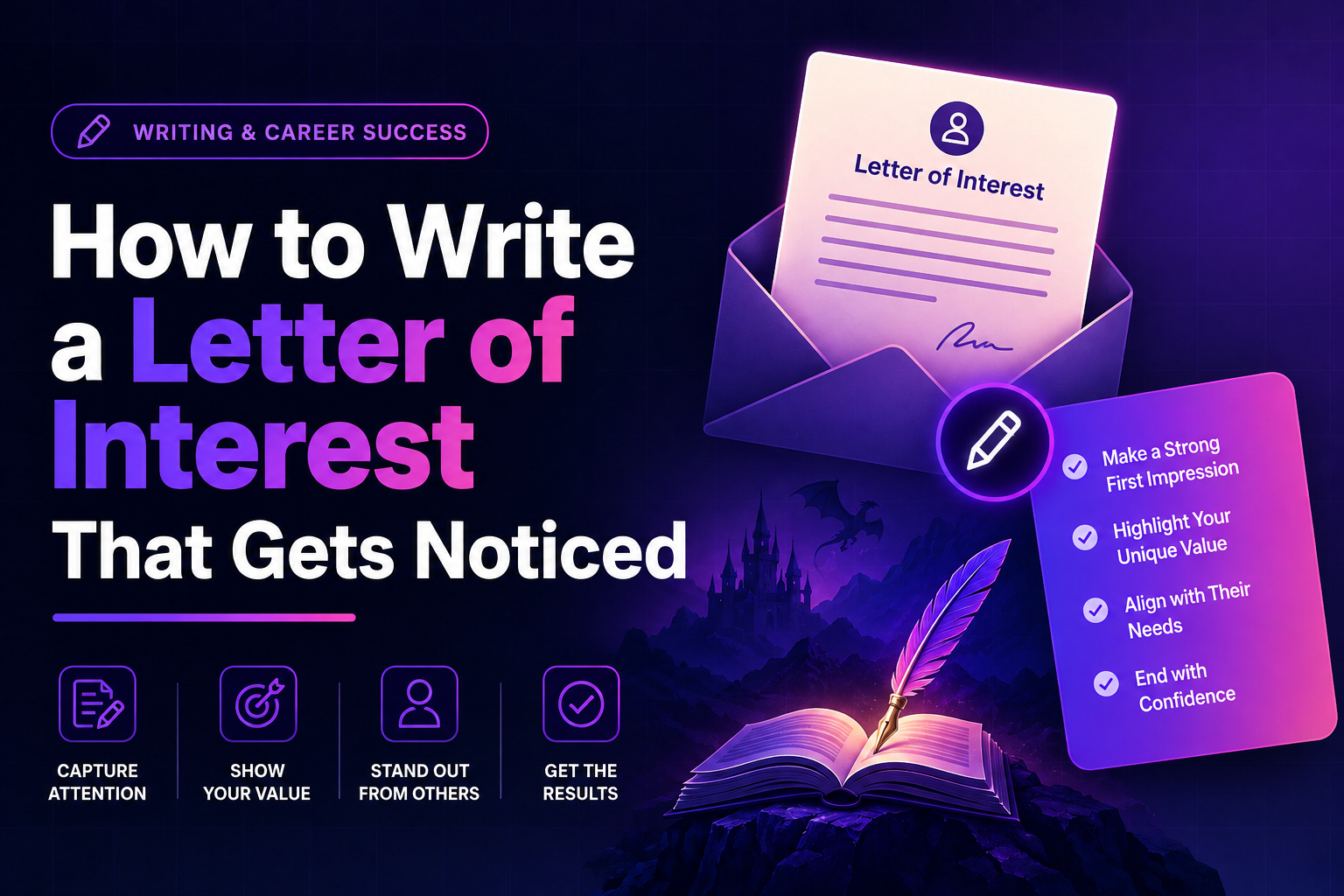
Learning how to write a letter of interest means understanding it’s different from a cover letter: it’s sent to a company without a specific job posting, expressing interest in working there generally and highlighting relevant skills in case a fitting role opens up. A strong letter of interest is short, specific about why that particular company matters to the sender, and clear about what value they could bring, rather than a generic message that could apply to any employer.
A letter of interest, sometimes called a prospecting letter or letter of inquiry, is a proactive way to get on a company’s radar before a matching position is even posted. This guide covers how to structure one, what to include, and the mistakes that make an otherwise strong letter get overlooked.
Unlike a cover letter responding to a specific opening, a letter of interest has to work harder to justify its own existence, since the recipient didn’t ask for it and isn’t necessarily expecting to receive one.
Understand How a Letter of Interest Differs From a Cover Letter
A cover letter responds to a specific, posted job opening and tailors its content directly to that role’s listed requirements. A letter of interest, by contrast, is sent speculatively, expressing general interest in an organization even when no matching position is currently posted.
This distinction shapes the entire letter. Without a specific job description to respond to, a letter of interest has to work harder to explain why the sender is interested in that particular company and what kind of role or contribution they’re hoping to make there.
Research the Company Before Writing
A letter of interest lives or dies on specificity, and specificity requires genuine research into the company beforehand: its recent projects, its mission, its culture, and ideally something concrete that connects the sender’s background to what that company actually does.
Generic praise, “I’ve always admired your company,” without any specific detail backing it up, reads as hollow and interchangeable with a hundred other letters the same recipient might receive. A specific reference to a recent product launch, initiative, or company value shows the letter was actually written for that organization.
Open With a Clear, Specific Reason for Writing
The opening paragraph should state clearly why the letter is being sent and to that specific company, not a vague introduction that could apply to any employer. Naming a specific connection, a mutual contact, a company initiative, a particular achievement, gives the letter immediate direction.
This opening also needs to establish quickly that the sender understands this is a speculative letter, not a response to a posted opening, since conflating the two formats confuses a reader who might otherwise search for a job listing that doesn’t exist.
Highlight Relevant Skills and Experience
The body of a letter of interest should connect the sender’s actual background to what the company does, even without a specific job description to align against. This means highlighting transferable skills and relevant experience in a way that’s specific rather than a generic list of strengths.
Concrete examples work better than broad claims. Rather than stating “I’m a strong problem-solver,” describing a specific situation where that skill produced a measurable result gives the recipient something real to evaluate, and it distinguishes the letter from ones built on vague self-description alone.
Explain What Value the Sender Could Bring
Since there’s no specific job opening to address, a letter of interest needs to make its own case for why the company should care: what problem the sender could help solve, what gap in the team they might fill, or what perspective they’d bring that the company doesn’t currently have.
This requires some informed guessing about the company’s likely needs, based on the research done beforehand, rather than a purely self-focused pitch about what the sender wants. Framing the letter around mutual benefit tends to land better than framing it purely around the sender’s own interests.
Keep the Letter Concise
A letter of interest works best kept to a single page, generally three to four focused paragraphs. Since it’s unsolicited, a long letter asks for more of the recipient’s attention than they’ve agreed to give, and length alone can work against it.
Every sentence should earn its place. A tight, well-edited letter signals professionalism and respect for the recipient’s time, while a sprawling one risks getting skimmed or set aside entirely before its strongest points are even reached.
Include a Clear, Low-Pressure Call to Action
The closing paragraph should state clearly what the sender is hoping for, a conversation, a chance to be considered for future openings, an introduction to the right person, without being pushy or presumptuous about the recipient’s time or interest.
A specific, easy next step, offering to follow up in a set timeframe or providing direct contact information, makes it simple for an interested recipient to respond, rather than leaving the next move entirely unclear or ambiguous.
Address the Letter to a Specific Person When Possible
A letter of interest addressed to a specific hiring manager, department head, or relevant contact by name performs noticeably better than one addressed generically to “Hiring Manager” or “To Whom It May Concern,” since it signals real research and genuine, targeted interest.
Finding the right contact sometimes takes extra effort, checking a company’s website, LinkedIn, or a mutual connection, but that effort itself demonstrates the kind of initiative many companies value in a prospective hire.
Proofread Carefully Before Sending
Since a letter of interest is unsolicited, it needs to make an especially strong first impression, which means typos, grammatical errors, or an incorrect company name are more damaging here than they might be in a response to a job posting where other factors also carry weight.
Reading the letter aloud, or having someone else review it, catches errors that become invisible after several rounds of self-editing. A single careless mistake can undermine an otherwise well-researched, well-written letter.
Follow Up Appropriately
A brief, polite follow-up a week or two after sending a letter of interest, if no response has come, is generally appropriate and shows continued interest without becoming pushy. This follow-up should be short and simply reaffirm interest rather than repeating the original letter’s content.
Following up more than once without any response usually signals it’s time to move on, since persistent, repeated outreach without a corresponding signal of interest from the company tends to have diminishing returns.
Decide Between Email and a Formal Letter Format
Most letters of interest today are sent by email rather than as a formally addressed printed letter, which changes a few practical details: a clear, specific subject line matters as much as the opening paragraph, since it determines whether the message gets opened at all.
Even in email form, the tone and structure should still read as a professional letter rather than a casual message. A subject line like “Interested in Opportunities at [Company]” or one referencing a specific mutual connection tends to perform better than a vague one like “Job Inquiry,” which is easy to overlook in a busy inbox.
Attach a Resume Without Relying on It to Do the Work
A letter of interest is typically sent alongside a resume, but the letter itself shouldn’t simply restate what the resume already lists. Its job is to add context, the specific reasoning and personal connection to the company that a resume’s bullet points can’t convey on their own.
Treating the letter and resume as complementary rather than redundant means the letter can focus on narrative and specific interest, while the resume handles the detailed record of experience and accomplishments in its own format.
Common Mistakes When Writing a Letter of Interest
The most common mistake is genericness, a letter vague enough to be sent to any company with minimal changes, which signals a lack of genuine research or specific interest in that particular organization.
Another frequent issue is confusing the format with a standard cover letter, referencing a specific job posting or requirements that don’t actually exist, which creates confusion for a recipient trying to understand what role, if any, is actually being discussed.
Frequently Asked Questions
How long should a letter of interest be?
Generally one page, around three to four focused paragraphs, since it’s unsolicited and needs to respect the reader’s time.
Is a letter of interest the same as a cover letter?
No. A cover letter responds to a specific job posting; a letter of interest is sent speculatively without one.
Who should a letter of interest be addressed to?
A specific person whenever possible, rather than a generic title like “Hiring Manager,” which signals more genuine research.
Should a letter of interest mention salary expectations?
Generally no. That conversation usually happens later, once genuine mutual interest in a specific role has been established.
Should a letter of interest be sent by email or printed mail?
Email is standard today, with a specific, clear subject line playing a role similar to the letter’s opening paragraph.
Final Thoughts
A strong letter of interest comes down to genuine, company-specific research, concise writing, and a clear sense of the value the sender could bring even without a posted opening to respond to. For writers working on longer-form projects beyond job-search correspondence, the same principles of clarity and audience awareness carry over directly into book-length writing, and Ebookerr can help turn that kind of finished manuscript into a properly formatted, published ebook. See how to write an ebook for more on that process.