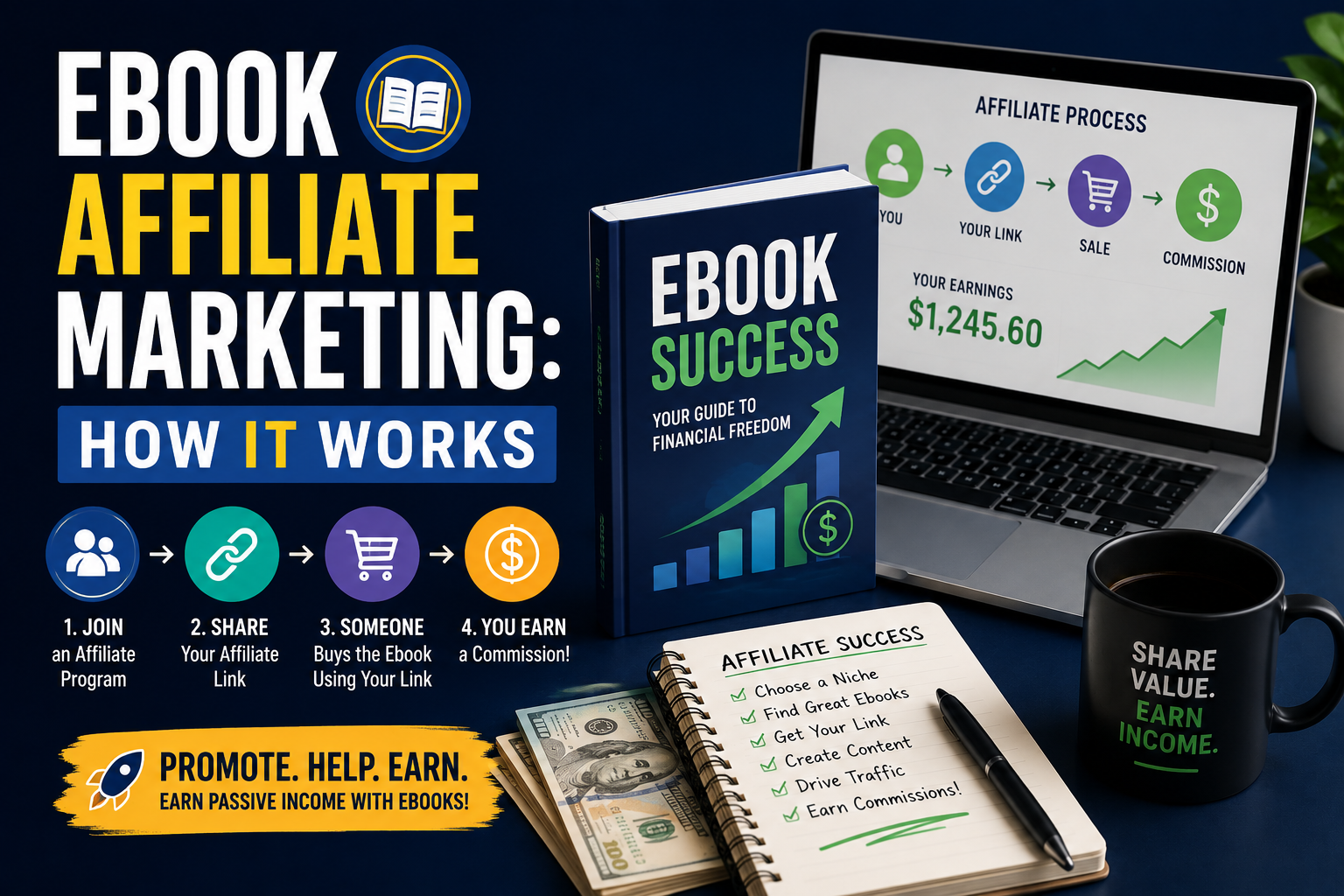
Quick answer: Ebook affiliate marketing works in one of two directions — either promoting other people’s ebooks through an affiliate link to earn a commission on each sale, or recruiting affiliates to promote your own ebook in exchange for a share of the revenue. Most ebook creators use affiliate programs through platforms like Gumroad, ClickBank, or direct partnerships, typically offering commissions between 20% and 50% since digital products carry no production cost per sale. The rest of this guide breaks down both sides of the model and how to actually set one up.
Two Sides of This Business Model
Before going further, it’s worth separating the two very different activities that both fall under this umbrella, since the strategy for each is almost entirely different.
Promoting other people’s ebooks (affiliate). This is the side most people think of first — writing reviews, comparison articles, or recommendation content that links to someone else’s ebook, earning a commission when a reader clicks through and buys.
Getting others to promote your own ebook (affiliate program owner). This is the flip side — setting up a program where bloggers, influencers, or email list owners promote your book in exchange for a cut of each sale, effectively turning other people’s audiences into a sales channel.
Both sides can work together. A seller with their own ebook and an active blog might run their own affiliate program while also promoting complementary products from other creators as an affiliate themselves.
How Promoting Other People’s Ebooks Works
Finding Ebook Affiliate Programs
Most ebooks with any meaningful sales volume are sold through one of a handful of platforms, each with its own built-in affiliate system:
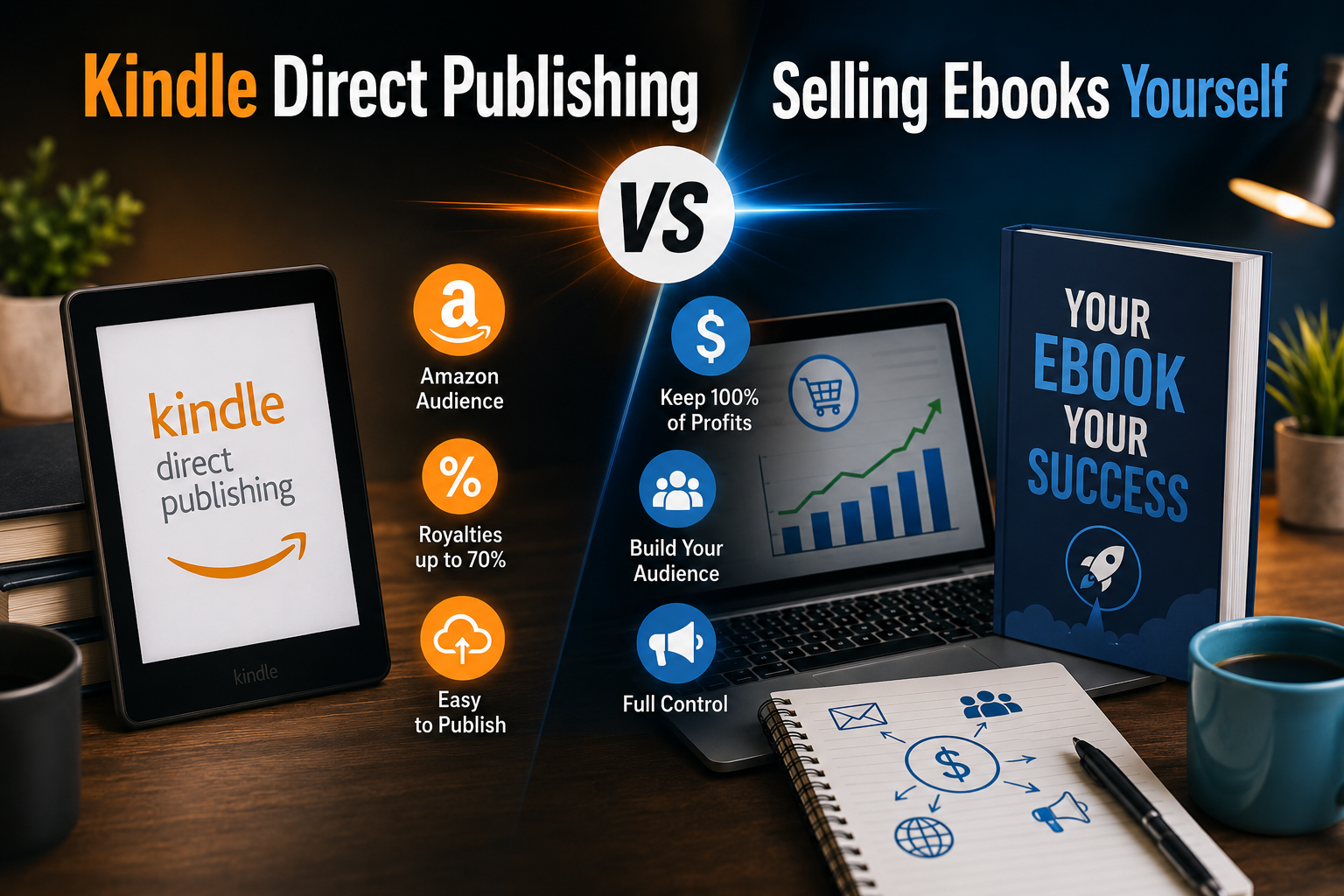
- Gumroad — creators can enable affiliate tracking directly in their product settings, and affiliates apply or get approved individually
- ClickBank — a long-running marketplace built specifically around digital product affiliate marketing, with commissions often in the 50–75% range
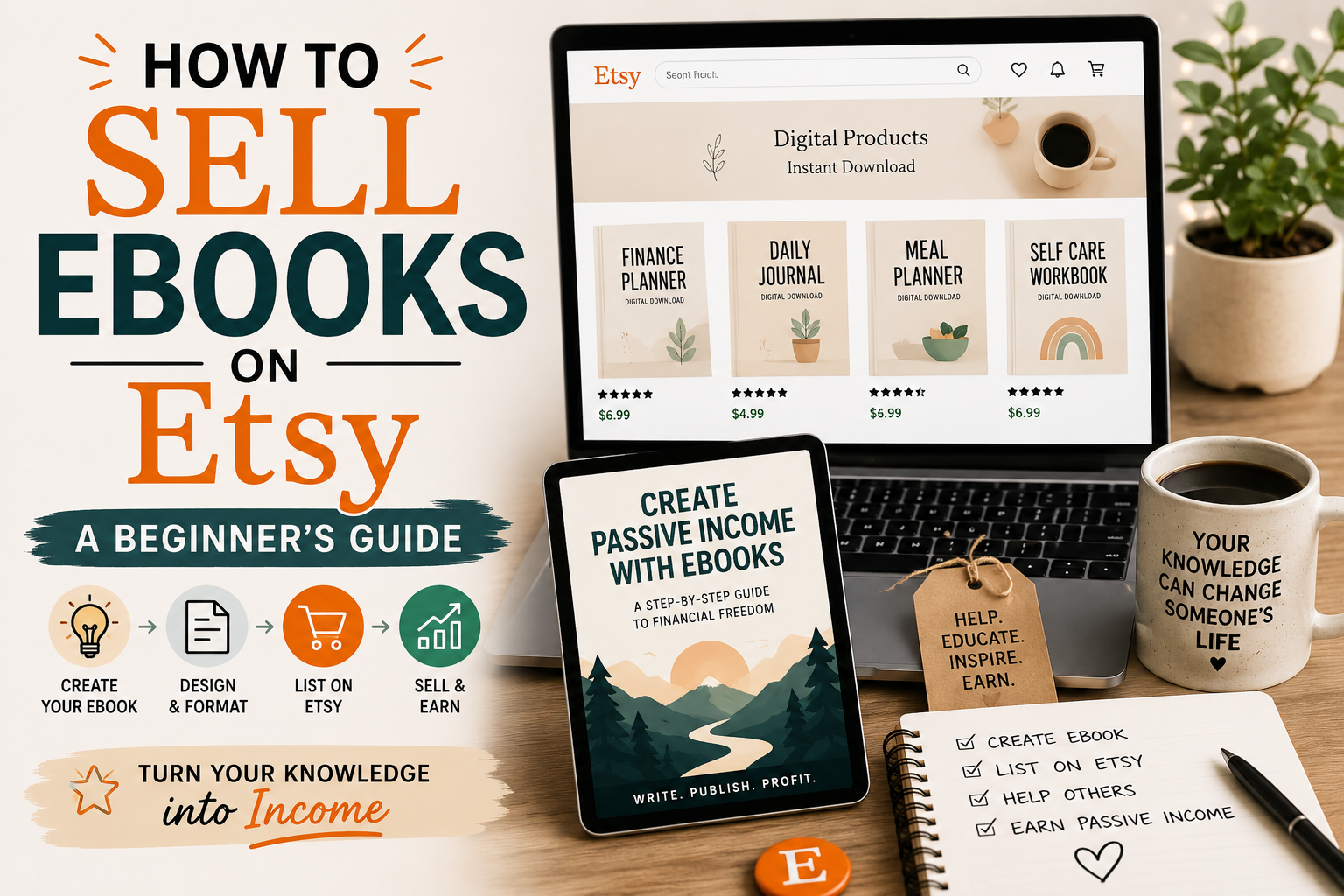
- Etsy — doesn’t have a native affiliate program for individual sellers, though some use third-party tools or direct partnerships
- Direct partnerships — many independent ebook creators run their own affiliate program through tools like Rewardful or PartnerStack, often advertised on their website
A quick way to find relevant programs is searching a niche alongside “affiliate program” (for example, “budgeting ebook affiliate program”) or checking whether a specific ebook creator mentions an affiliate option on their site, which is common among established digital product sellers.
Building Content That Actually Converts
Affiliate income from ebooks rarely comes from a single link dropped into an unrelated post. It comes from content specifically built around helping a reader make a decision:
- Comparison articles (“Best budgeting ebooks for freelancers”) that place the affiliate product alongside honest alternatives
- Problem-focused guides that naturally lead into a recommended resource as the solution
- Review-style content based on genuinely using or evaluating the product, which tends to convert better than generic promotional copy
- Email list content, for creators with an existing audience already primed to trust recommendations
The common thread across all of these is that the content exists to genuinely help the reader first, with the affiliate link positioned as a natural next step rather than the entire point of the page.
Realistic Income Expectations
Affiliate income from ebook promotion tends to scale with traffic and audience trust more than with any clever tactic. A blog post ranking for a specific, purchase-intent keyword (“best productivity ebook for entrepreneurs”) with steady monthly traffic can generate a modest but consistent stream of commissions, while a single social media post rarely produces lasting income on its own. Most successful ebook affiliates build a small library of evergreen content over months, rather than relying on one-off promotions.
How Running Your Own Ebook Affiliate Program Works
Why Offer an Affiliate Program at All
For sellers who already have a finished ebook, an affiliate program essentially turns other people’s audiences into an extension of the sales team, without any upfront advertising spend. Since there’s no cost to produce another copy of a digital file, offering a generous commission — often 30–50% — still leaves healthy margin on each sale, especially compared to physical products where commission has to come out of a much thinner margin.
Setting Up an Affiliate Program
- Choose a platform that supports affiliate tracking. Gumroad has this built in. Standalone websites often use a plugin or service like Rewardful, ThriveCart, or PartnerStack layered on top of the checkout process.
- Decide on a commission rate. Most digital product programs fall between 20% and 50%, with higher rates common for newer sellers trying to attract their first affiliates, since a strong incentive is often needed to convince someone to promote an unfamiliar product.
- Create affiliate resources. Providing pre-written email copy, banner images, and sample social posts significantly increases how much affiliates actually promote the product, since it removes the friction of them having to create their own materials.
- Recruit affiliates directly. Rather than waiting for people to find the program, reaching out to bloggers, newsletter writers, or influencers in the same niche — with a clear pitch on commission and target audience fit — tends to produce far better results than a passive “join our affiliate program” page.
- Track and pay reliably. Affiliates who don’t get paid on time or can’t see accurate tracking data tend to stop promoting quickly. Reliable, transparent reporting is one of the biggest factors in whether an affiliate relationship lasts beyond the first payout.
What Makes an Ebook Easy to Promote
Affiliates are more likely to promote a product that’s easy to describe and clearly differentiated. A well-formatted, professional-looking ebook with a clear cover, a focused topic, and a specific target audience gives affiliates something concrete to talk about, compared to a vague or poorly presented product that’s harder to pitch convincingly.
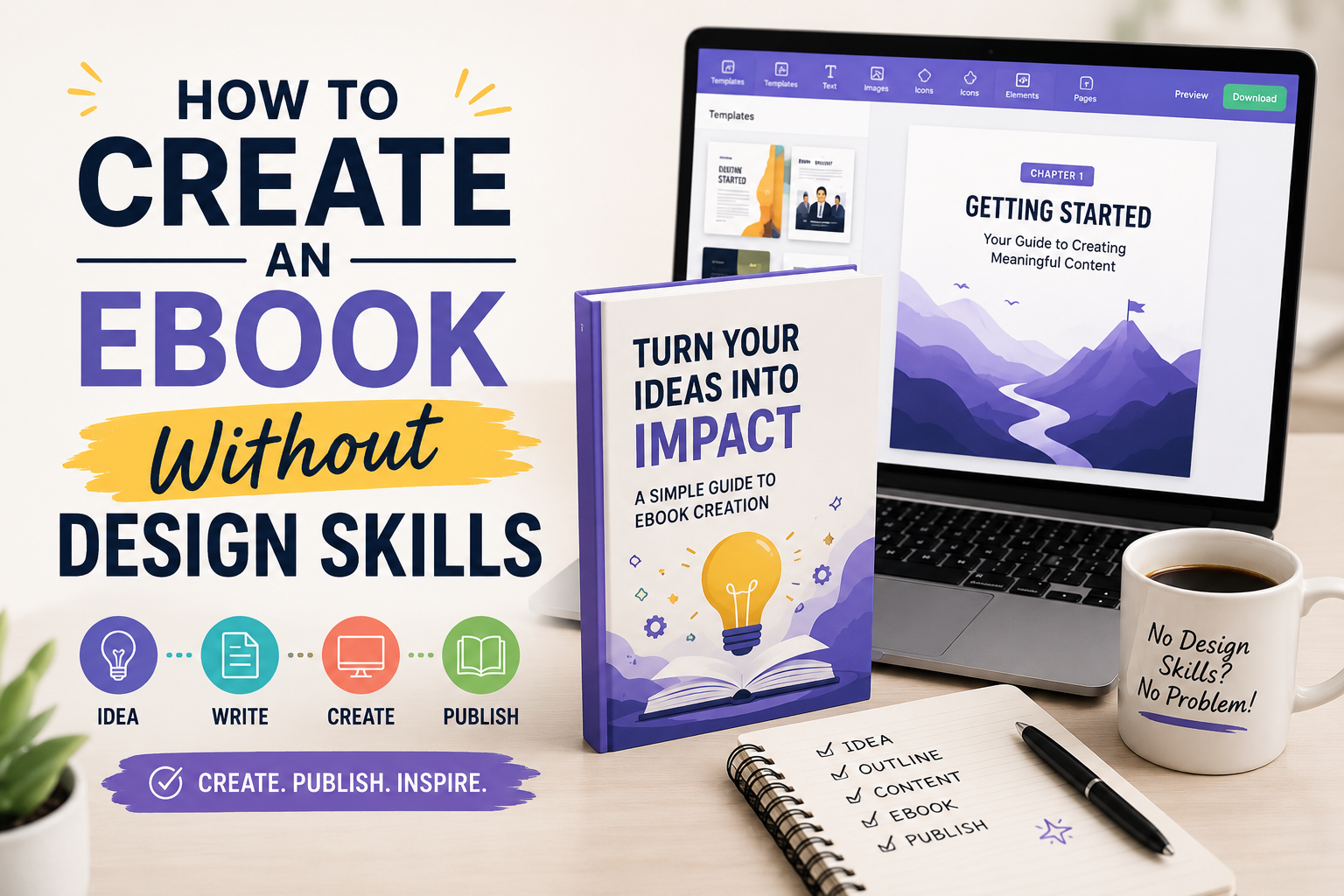
This is one area where the tool used to create the ebook matters more than it might seem. A polished, consistently formatted book — the kind produced by a template-based tool like Ebookerr — gives affiliates confident, presentable preview images and sample pages to use in their own promotional content, which lowers the barrier to them actually following through on a promotion. At $9.97/month for unlimited use, Ebookerr also makes it practical to produce companion lead magnets or bonus guides specifically for affiliates to offer their audience as an incentive, without adding meaningful production cost per additional resource.
Common Mistakes on Both Sides
As an affiliate: Promoting a product without genuinely reviewing or understanding it usually shows, and readers increasingly recognize generic, copy-paste affiliate content. Recommending only the highest-commission product rather than the best fit for the audience tends to hurt long-term trust and, eventually, conversion rates.
As a program owner: Setting a commission too low to be worth an affiliate’s effort is one of the most common reasons programs stay inactive. A 10% commission on a $15 ebook amounts to $1.50 per sale — rarely enough to motivate someone with an established audience to prioritize promoting it over other opportunities.
As a program owner: Launching a program with no promotional materials and expecting affiliates to figure out how to sell the product themselves. Most affiliates convert better with ready-made assets than with a blank slate.
On both sides: Ignoring disclosure requirements. Affiliate relationships need to be disclosed to readers in most jurisdictions, and skipping this isn’t just a legal risk — it also tends to erode reader trust once discovered.
Choosing Between the Two Roles
Some creators naturally lean toward one side of this model over the other, and it’s worth being honest about which fits better before investing significant time.
Promoting other products fits well for people who already run a content site, blog, or newsletter in a relevant niche but haven’t created their own digital product yet. It requires less upfront work — no product to build, no fulfillment to manage — but income is capped by how much relevant traffic and trust the promoter can generate, and by commission rates set by someone else.
Running a program for an original ebook fits well for creators who already have a finished product and some initial traction, since recruiting affiliates works best when there’s evidence the product actually sells. Trying to build an affiliate program around an untested ebook with zero sales history is usually harder than it sounds — most potential affiliates want some proof the product converts before dedicating their own audience’s attention to it.
A hybrid approach is common among more established creators: publish an original ebook, build a small affiliate program around it, and simultaneously promote a handful of complementary products from other creators in the same niche. This diversifies income without requiring either side of the model to carry all the weight on its own.
Tools That Support This Kind of Program
Beyond the affiliate tracking platform itself, a few supporting pieces tend to determine whether a program actually generates ongoing sales rather than sitting dormant after launch.
A dedicated affiliate landing page. A simple page explaining the commission structure, target audience, and available promotional assets performs noticeably better than expecting potential affiliates to email in and ask for details.
Ready-made promotional assets. Pre-written email swipe copy, a handful of social media captions, and a few banner images remove the single biggest barrier to affiliates actually promoting a product — the effort of creating their own materials from scratch.
A companion lead magnet. Many successful programs pair the paid ebook with a free, shorter resource affiliates can offer their audience as an incentive to click through, which tends to outperform a bare, sales-page-only link. Since a flat-rate tool like Ebookerr doesn’t charge per project, producing this kind of companion resource alongside the main ebook adds no incremental software cost, which makes it an easy addition for sellers testing whether a lead magnet improves affiliate conversion.
Frequently Asked Questions
What commission rate is typical for ebook affiliate programs? Most digital product affiliate programs offer between 20% and 50%, higher than typical physical product commissions, since there’s no manufacturing or shipping cost eating into the margin.
Do I need my own website to be an ebook affiliate? Not strictly, though it helps significantly. Email newsletters and social media accounts with an engaged following can also drive affiliate sales, though a website with evergreen, search-optimized content tends to produce more consistent long-term income.
Can I run an affiliate program for a single ebook, or does it need a full product line? A single ebook can absolutely support its own affiliate program. Many successful digital product affiliate programs started with just one product before expanding.
How do I track affiliate sales for my own ebook? Platforms like Gumroad include built-in affiliate tracking. For sales through a personal website, a dedicated tool like Rewardful or ThriveCart connects to most checkout systems to handle tracking and payouts automatically.
Is this business model still worth it in 2026? Yes, particularly for creators promoting products in specific, high-intent niches rather than broad, oversaturated categories. The digital product space continues to grow, and affiliate commissions on ebooks remain higher than most physical product categories, making it a reasonable channel for both sides of the relationship.
Final Thoughts
This model works well precisely because digital products have no per-sale production cost, which allows for commission rates that would be unsustainable in most physical product categories. Whether approaching it as an affiliate promoting someone else’s work or as a creator building a program around an original book, the same principle applies on both sides: genuine value, clear presentation, and reliable follow-through matter more than aggressive tactics. For creators building their own program, starting with a polished, professionally formatted ebook — the kind a tool like Ebookerr makes achievable without a design background — gives affiliates something worth promoting from day one.